The Hierarchy of Traditional Mambilla Chiefs and Leaders
The traditional leadership system of the Mambilla people is an important aspect of their cultural heritage, social organization, and community administration. It reflects a structured system of authority through which communities, villages, kindreds, and families are traditionally guided. The hierarchy of traditional Mambilla chiefs and leaders consists of different titles, each representing a distinct level of leadership and responsibility within the society.
According to the documented hierarchy of traditional Mambilla leadership, six major titles are identified: Tambon, Mbondua, Mbon, Ngwa, Kyur, and Nàlelí. These titles represent different levels of traditional authority, ranging from paramount leadership to family headship.
At the highest level is the Tambon, described as a First-class Paramount Chief. This title represents a significant position within the traditional leadership structure. The Tambon occupies a distinguished place in the hierarchy, symbolizing the highest level of traditional authority identified in the documented structure.
The second level is the Mbondua, described as a Paramount Chief other than First-class. This position also represents paramount traditional leadership but is differentiated from the First-class Paramount position. The distinction between Tambon and Mbondua demonstrates the classification of traditional authority within the Mambilla leadership system.
The third position is the Mbon, which is described as a District Head. The Mbon represents an important level of traditional administration, connecting higher traditional authorities with communities under district leadership. The terms Tambon, Mbondua, and Mbon are noted as having distinct meanings, although historical usage among some people may have involved less strict differentiation. In contemporary usage, a clearer distinction between these titles may be necessary.
At the village level, the Ngwa serves as the Village Head. This position represents leadership within a village community and forms an important part of the traditional administrative arrangement. The Ngwa plays a significant role in maintaining community organization and representing village interests within the broader traditional leadership structure.
The Kyur, described as a Kindred Head or Ward Head, occupies another important position. This level of leadership is associated with the administration and coordination of a kindred or ward. It represents a closer connection between traditional leadership and the people within smaller community units.
At the family level is the Nàlelí, described as the Family Head. This position represents the most immediate level of traditional leadership within the hierarchy. The family head is associated with the organization and representation of family members, contributing to the continuity of family traditions, values, and relationships.
The Importance of the Mambilla Traditional Leadership System.
The traditional hierarchy of Mambilla chiefs and leaders illustrates how authority is organized across different levels of society. From paramount leadership to family headship, each title represents a distinct position within the traditional structure.
Understanding these titles is essential for documenting Mambilla history, preserving cultural identity, and educating younger generations about their heritage. It also provides a foundation for further research into the responsibilities, historical development, and relationships among traditional leaders.
As the Mambilla people continue to preserve and promote their cultural heritage, documenting the traditional leadership hierarchy remains an important step toward ensuring that these institutions, titles, and their meanings are understood by present and future generations.
Source: Evolution of the Traditional political system in Mambilla
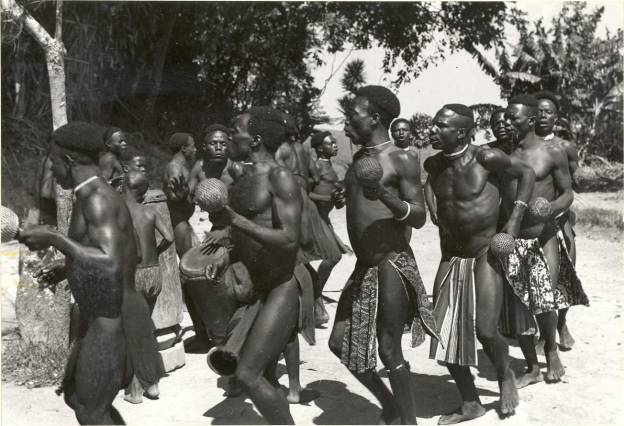
CHANGES IN THE STRUCTURE OF MAMBILLA CHIEFS IN EUROPEAN TIMES
1906–1915: In German Times
30 Mambilla recognized Chiefs were recorded. No other chief besides Mambilla ones. …
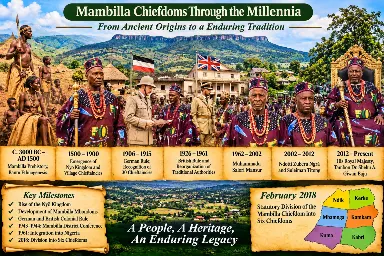
MAMBILLA CHIEFDOMS THROUGH THE MILLENNIA: FROM ANCIENT ORIGINS TO THE MODERN TRADITIONAL INSTITUTION
The history of the Mambilla Chiefdoms is a remarkable account of ancient origins, cultural evolution, traditional govern…
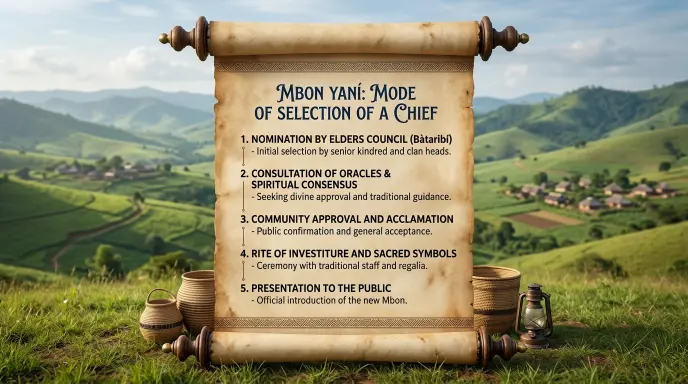
Mbon Yaní: Mode of Selection of a Chief
In old Mambilla system, a dying chief usually named his successor in advance. His will was respected. If however, no suc…

The Urban Metamorphosis of Gembu: From Isolated Sub-Villages to a Unified Plateau Metropolis
The contemporary landscape of Gembu Town, historically and locally known as Bommi, is a fascinating testament to rapid u…