CHANGES IN THE STRUCTURE OF MAMBILLA CHIEFS IN EUROPEAN TIMES
1906–1915: In German Times
30 Mambilla recognized Chiefs were recorded. No other chief besides Mambilla ones.
1926: Reorganization of Chiefs.
The 30 chiefs (all Mambilla) were grouped into 10 (the so-called Izard Chiefs").
Mbon Giwàn Báju of Ndik,
Mbon Mindèl of Mvùrrbò,
Mbon Chul K wúnáchur of Gam,
Mbon Tápnyia of Mbugo,
Mbon Tip of Ndiim,
Mbon Kìmchìm of Bang,
Mbon Gara of Mbunip,
Mbon Gèlmvû of Bommi,
Mbon Yípsò of Kuma,
Mbon Wan of Ngumbun.
At that time, there were no other ethnic groups known villages in Mambilla beside Mambilla.
1929: Chiefs and Kindred Heads.
29 Chiefs (all Mambilla). Many Kindred Heads including 1 Sarkin Hausawa (ward heads of the settler community) alongside 1 Kobírà Kindred Head too at each of New Ndagà and Old Mbungnu (Kwu-Mbungnu). Neither Mbons nor jauros at New Ndagà and Kwu-Mbungnu yet.
1934–1935: Changes in Recognized Chiefs.
1934: 34 all-Mambilla Chiefs (officially recognized Mbons/Ngwas).
1935: 34 Chiefs reduced to 29 (all Mambilla).
By 1935, there were officially 29 all-Mambilla Chiefs in the Mambilla Area as against 11 for the Gashaka area (Rec. Rept. B3J, Ann. Rept. Notes, para. 14). At that time, there were neither Kaka nor Fulani Chiefs in the Mambilla Area. Only about 4 Kaka ward heads under the Mbons of Bang_ and Mbunip (Mbungnu), and 2 Sarkin Hausawas (ward heads of the settler community) existed without village heads in the British usage.
In other words, there were 29 Mbons and Ngwas but no jauros. Note that by 1935, the first Adamawa consul was sent, and should he have found a Fulbe settlement, he would have wasted no time in appointing a jauro. As he eventually did at the new settlement of Ndàgà.
1936: Appointment of New Village Heads
4 Kaka-Yamba "Village Heads" appointed. A new village head (Danlawan of Yola) was appointed for the new settlement of New Ndàgà by Marafa, his elder brother. A separate Mambilla Chief appointed for Saa, which used to be under Mbar, and from thence Ndiim before 1927.
Initially grouped with the Mbar-Ndiim Mambilla down to 1936, but was afterward wrongly classed with the Kaka.
1943: Official Recognition
Officially, 33 Mambilla Chiefs, (B3J, 1943 Annual Report, STA, para 14) 4 Kaka, 1 Hausa-Fulani at New Ndàgà.
1952: Reduction in Mambilla Chiefs
Mambilla Chiefs reduced to 25 by Danlawan; 4 Kaka-Yamba chiefs, 1 at Sah with tenuous alignments (Mambilla classed with Yamba); 1 Fulani Village Head at New Ndàgà. Total = 31.
1961: Further Administrative Changes
25 Mambilla Chiefs; another Hausa-Fulani Head appointed at Old Mbungnu (Guroje). Previously, only Sarkin Hausawa and Kobira ward heads were appointed. Total Number of chiefs recognized by the sub colonial authority in 1961 = 32.
Source: Evolution of the Traditional political system in Mambilla
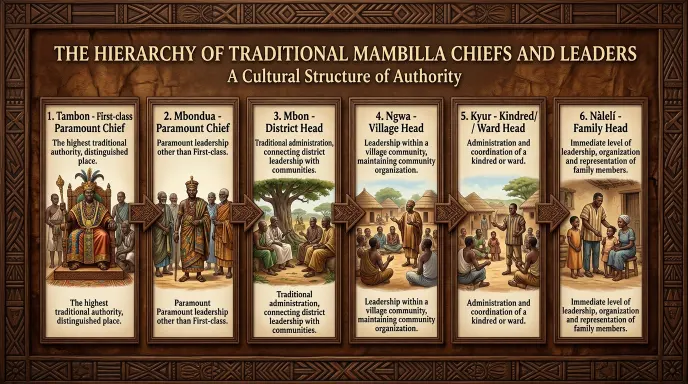
The Hierarchy of Traditional Mambilla Chiefs and Leaders
The traditional leadership system of the Mambilla people is an important aspect of their cultural heritage, social organ…
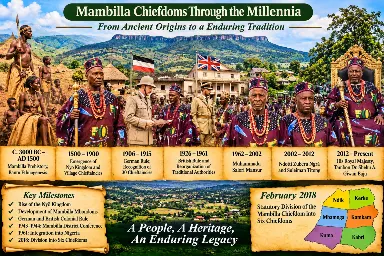
MAMBILLA CHIEFDOMS THROUGH THE MILLENNIA: FROM ANCIENT ORIGINS TO THE MODERN TRADITIONAL INSTITUTION
The history of the Mambilla Chiefdoms is a remarkable account of ancient origins, cultural evolution, traditional govern…
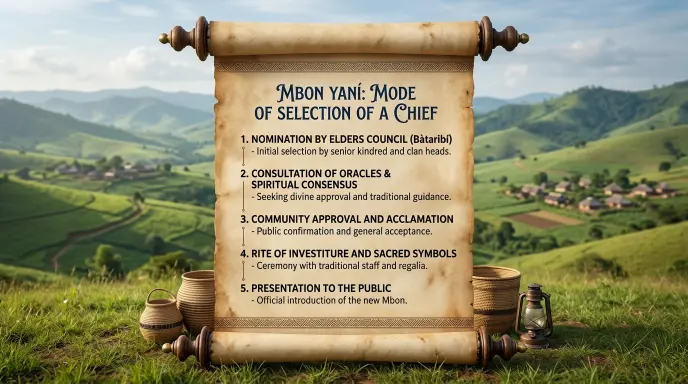
Mbon Yaní: Mode of Selection of a Chief
In old Mambilla system, a dying chief usually named his successor in advance. His will was respected. If however, no suc…
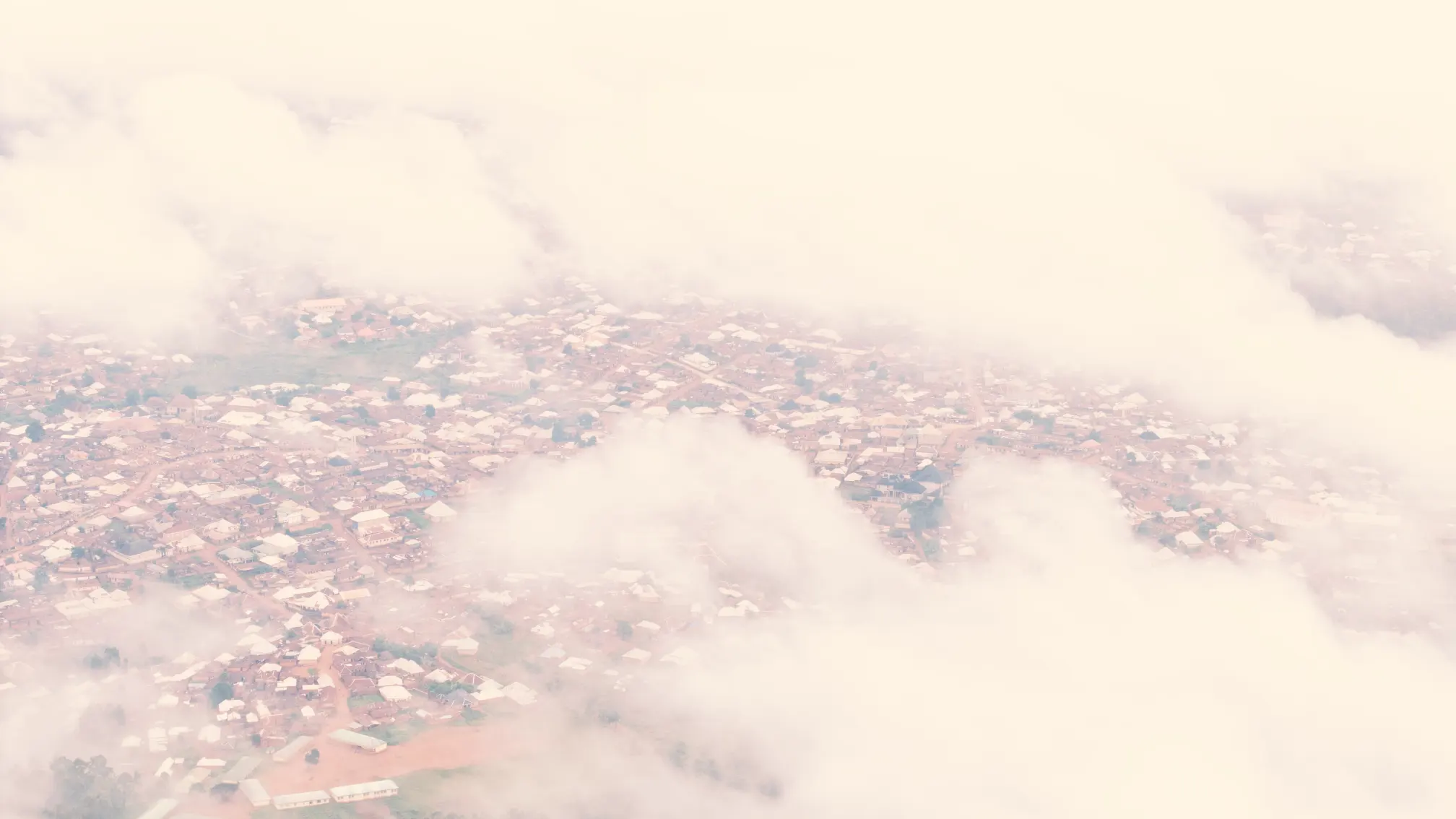
The Urban Metamorphosis of Gembu: From Isolated Sub-Villages to a Unified Plateau Metropolis
The contemporary landscape of Gembu Town, historically and locally known as Bommi, is a fascinating testament to rapid u…