MAMBILLA CHIEFDOMS THROUGH THE MILLENNIA: FROM ANCIENT ORIGINS TO THE MODERN TRADITIONAL INSTITUTION
The history of the Mambilla Chiefdoms is a remarkable account of ancient origins, cultural evolution, traditional governance, political transformation, and the resilience of the Mambilla people. Spanning thousands of years, the historical narrative traces the development of Mambilla society from its prehistoric beginnings to the establishment of the modern traditional institution on the Mambilla Plateau in Taraba State, Nigeria.
The evolution of the Mambilla traditional political system reflects the emergence of village chieftaincies, federations, regional authorities, and eventually the statutory division of the Mambilla Chiefdom into six chiefdoms in February 2018.
1. C. 3000 BC – AD 1500: Mambilla Prehistory and Bantu Ethnogenesis.
The earliest period of Mambilla history is associated with prehistoric developments, Bantu ethnogenesis, and the expansion and dispersal of populations across parts of Africa. According to the historical account presented, the Mambilla region played an important role in the formation and movement of various groups during this period.
Between approximately 2000 BC and AD 1500, different groups are believed to have expanded away from the region, while the emergence of the Nyö Kingdom marked a significant development in the political history of the area.
These early historical developments laid the foundation for the formation of communities, cultural identities, and traditional political structures that would later characterize Mambilla society.
2. 1500–1900 AD: Emergence of the Nyö Kingdom and the Rise of Village Chieftaincies
The period between 1500 and 1900 witnessed the emergence and development of the Nyö Kingdom, followed by dispersals from Nyö. These movements initially extended northwards into other parts of the Mambilla Plateau and subsequently southwards into the Ndom Lowland.
During this era, the Mambilla Mbondoms, village chieftaincies, and village federations emerged and developed. The traditional political system gradually became more organized, with village authorities and federations playing important roles in community administration.
The period also witnessed external invasions from the north, leading to instability and conflict, particularly between 1890 and 1901. The death of the invader Usmanu Hamangabdo in 1893 is identified as an important event in this turbulent period.
Despite the challenges, the Mambilla traditional political system continued to develop and consolidate.
3. 1906–1915: The German Colonial Period
The German colonial period marked a significant turning point in the history of Mambilla traditional governance. According to the historical account, German authorities recognized approximately 30 Mambilla chieftaincies. These traditional authorities represented different communities and played important roles in local administration.
The prominence of Ndik under German rule, alongside the status of Mbamnga, Kuma, Kerke, and other communities, forms an important part of this historical period.
At the same time, the British were making appointments of their own, including Giwan Baju and Diko, reflecting the growing influence of competing colonial administrations in the region.
The German period therefore represents an important chapter in the recognition and development of indigenous Mambilla traditional authorities.
4. 1916–1925: Mambilla Independence and the European Interregnum
Following the German period, the Mambilla Plateau experienced a transitional era characterized by changes in colonial administration and the political status of its traditional authorities.
This period, described in the historical account as the Mambilla Independence and European Interregnum, preceded the establishment of a more centralized British administrative system.
The transition brought significant changes to the traditional governance structure, as colonial authorities began introducing administrative arrangements that would reshape the existing chieftaincies.
5. 1926–1961: British Rule and the Reorganization of Mambilla Traditional Authorities
The British takeover ushered in a new era of colonial administration. The British introduced new administrative units and subjected the Mambilla people to a system of foreign rule that significantly altered their traditional political structure.
In 1926, the approximately 30 chieftaincies recognized under German administration were reduced to 10. Subsequently, four major regional chieftaincies were nominally established: Mbamnga, Kamkam, Kuma, and Kabri.
Bommi, now known as Gembu, remained the central Native Authority headquarters.
These regional chieftaincies were assigned judicial and administrative responsibilities and were expected to develop into the future chiefdoms of the Mambilla Plateau.
Their authority was later reinforced through legal instruments, including the 1962 Native Courts (Jurisdiction and Powers) Notice, the 1967 Native Courts (Jurisdiction and Powers) Notice, and the 1968 Area Courts Edict of the North-Eastern State of Nigeria.
6. The 1943 and 1944 Mambilla District Conferences
An important development during British rule was the Mambilla District Conference, held in two sessions in 1943 and 1944. The conferences brought together chiefs from across the Mambilla Plateau to deliberate on matters affecting their communities and traditional institutions.
Among the resolutions reportedly adopted were the rejection of foreign Hausa traditional titles and the adoption of the Mambilla language as the language of administration on the Plateau. These resolutions represented efforts by indigenous traditional authorities to preserve Mambilla identity, cultural heritage, and administrative independence within the colonial system.
7. The Era of Alien District Heads
Between 1935 and 1959, the British administration appointed district heads from outside the Mambilla indigenous traditional structure. The historical account identifies the following individuals:
1935–1938: Marafa Mohammed
1940–1952: Danlawan Dahiru
1953–1959: Mukaddas Usman.
These individuals, described in the account as Yola-appointed representatives, exercised administrative authority over the Mambilla District. Their appointments reflected the colonial administration's preference for centralized control and its influence over indigenous traditional governance.
8. 1959–1961: Plebiscites, Political Protests, and the End of Colonial Rule
The period between 1959 and 1961 was politically significant for the Mambilla people. Two plebiscites, protests, anti-Nigeria votes, and subsequent political negotiations formed part of the process through which Mambilla, Kurmi, Gashaka, and other areas officially became part of Nigeria. Following the second plebiscite held on Saturday and Sunday, 11–12 February 1961, these areas became officially incorporated into Nigeria.
The transition also marked the gradual end of European colonial administration on the Mambilla Plateau. Audu Giwan Baju and Indigenous Leadership Between 1960 and 1961, Audu Giwan Baju emerged as an indigenous leader of the Mambilla District. European rule ended in April 1961. However, the death of Audu Giwan Baju in December 1961, under circumstances described in the historical account as suspicious, became another significant event in the political history of the Mambilla traditional institution.
9. 1962–2002: Muhammadu Salori Mansur
Following the colonial transition, Muhammadu Salori Mansur became the traditional leader of the Mambilla District, serving from 1962 to 2002. His reign marked a period of continuity in the traditional leadership structure following the end of European administration.
The February 1962 political intrigues associated with his emergence represent an important episode in the history of the Mambilla traditional institution. His long period of leadership contributed to the continued existence of a centralized traditional authority on the Mambilla Plateau.
10. 2002–2012: Leadership Transition
Following the reign of Muhammadu Salori Mansur, the Mambilla traditional institution experienced a series of leadership transitions.
Ndotti Zuberu Ngrà of Ndik served as Acting Tambon from 2002 until November 2011, when he died. His leadership represented another important phase in the succession of the Mambilla traditional institution.
Suleiman Titong of Kerke Following the death of Ndotti Zuberu Ngrà, Suleiman Titong of Kerke assumed the position of Acting Tambon. He served from November 2011 until 4 December 2012. His tenure provided continuity during the transition to the next substantive traditional ruler.
11. December 2012–Present: His Royal Majesty, Tambon Dr. Shehu A. Giwan Baju
On 5 December 2012, His Royal Majesty, Tambon Dr. Shehu A. Giwan Baju, assumed the traditional leadership of the Mambilla Chiefdom. His emergence marked a new chapter in the history of the Mambilla traditional institution. Under his leadership, the traditional institution continued to evolve, reflecting the changing administrative and political realities of the Mambilla Plateau.
12. February 2018: Statutory Division of the Mambilla Chiefdom into Six Chiefdoms
One of the most significant developments in the modern history of Mambilla traditional governance occurred in February 2018, when the Mambilla Chiefdom was statutorily divided into six chiefdoms. This development represented a major transformation of the traditional administrative structure, bringing governance closer to the various communities and establishing a new framework for the administration of traditional affairs.
The division marked the culmination of centuries of political evolution, beginning with village chieftaincies and federations, continuing through colonial reorganization, and eventually leading to the establishment of multiple statutory chiefdoms.
Conclusion
The history of Mambilla Chiefdoms through the millennia is a story of cultural endurance, political transformation, and the preservation of indigenous identity. From the prehistoric period and the emergence of the Nyö Kingdom to the development of village chieftaincies, the German and British colonial periods, and the establishment of modern traditional institutions, the Mambilla people have experienced significant changes in their political organization.
The traditional institution remains an important custodian of Mambilla culture, history, identity, and community leadership. The statutory division of the Mambilla Chiefdom into six chiefdoms in February 2018 represents a major milestone in this long historical journey. Understanding this history is essential to appreciating the heritage of the Mambilla people and the evolution of their traditional institutions across generations.
Mambilla history is not merely a record of rulers and administrative changes; it is the story of a people, their identity, their heritage, and their enduring connection to the Mambilla Plateau.
Source: Evolution of the Traditional political system in Mambilla
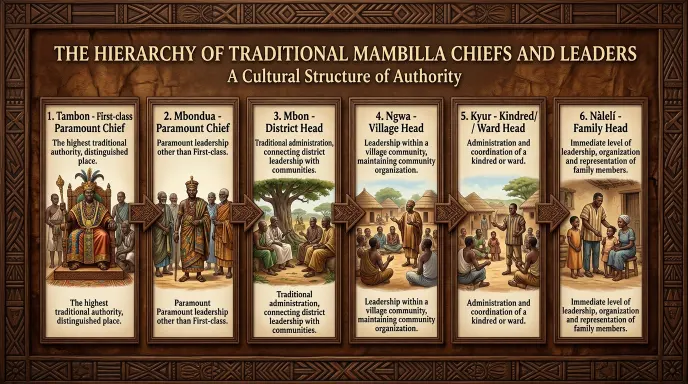
The Hierarchy of Traditional Mambilla Chiefs and Leaders
The traditional leadership system of the Mambilla people is an important aspect of their cultural heritage, social organ…
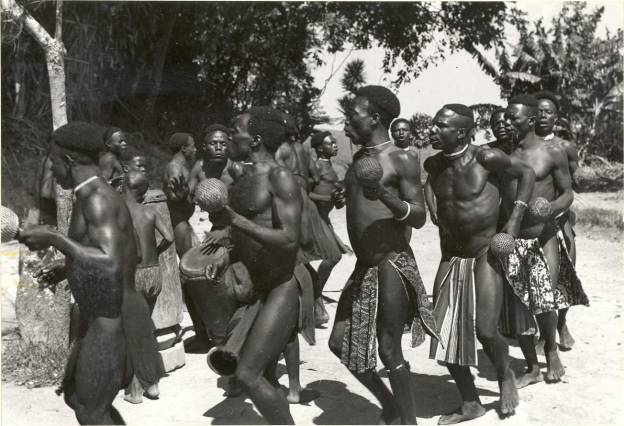
CHANGES IN THE STRUCTURE OF MAMBILLA CHIEFS IN EUROPEAN TIMES
1906–1915: In German Times
30 Mambilla recognized Chiefs were recorded. No other chief besides Mambilla ones. …
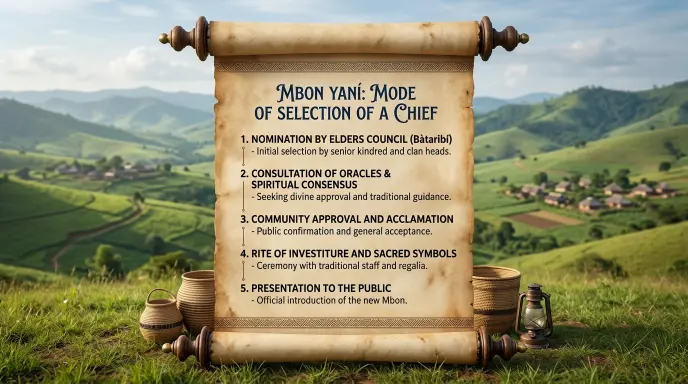
Mbon Yaní: Mode of Selection of a Chief
In old Mambilla system, a dying chief usually named his successor in advance. His will was respected. If however, no suc…

The Urban Metamorphosis of Gembu: From Isolated Sub-Villages to a Unified Plateau Metropolis
The contemporary landscape of Gembu Town, historically and locally known as Bommi, is a fascinating testament to rapid u…