More Than 72,000 Migrants Cross From Morocco Into Ceuta in Unprecedented Surge
Thousands streamed into the Spanish enclave as authorities struggled to contain the unprecedented movement
More than 72,000 migrants crossed from Morocco into the Spanish territory of Ceuta during a massive border rush in late July, creating one of the most serious migration crises to hit Spain and the European Union in recent years.
The mass movement took place mainly on July 30 and 31, with migrants entering the tiny Spanish enclave by land and sea. The scale of the crossing overwhelmed local authorities and triggered an immediate response from Spanish security forces
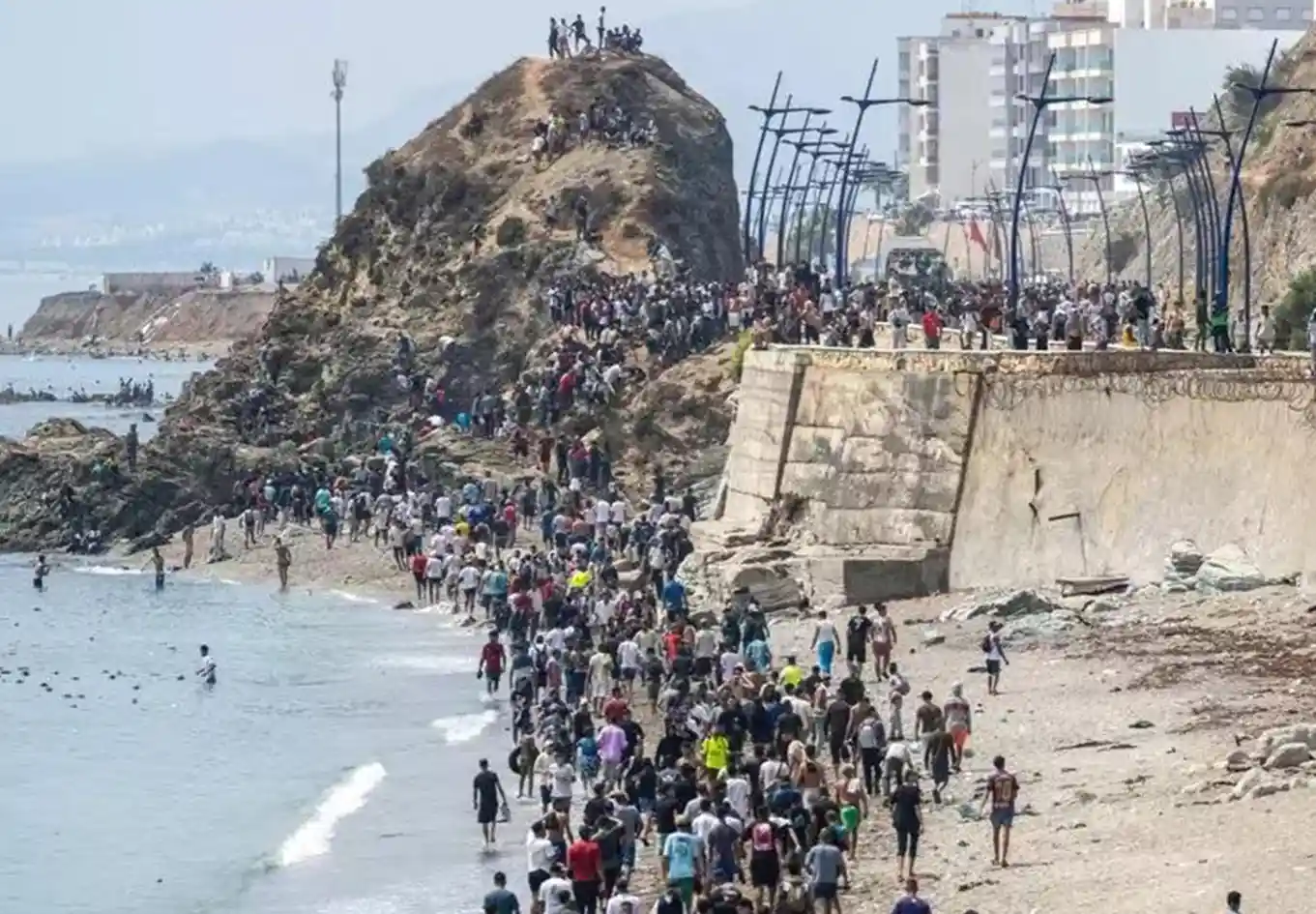
Ceuta, a small Spanish territory on Morocco's northern coast, has long been one of the most sensitive migration points between Africa and Europe. The territory is surrounded by Morocco and has heavily fortified borders designed to prevent irregular crossings.
Deadly journey
The crossing also had a heavy human cost. Reuters reported on August 31 that at least 100 people died in the attempt, according to Ceuta's local authorities. A separate Reuters report gave a breakdown of 82 deaths on the Spanish side and 14 confirmed deaths in Morocco, bringing the confirmed figure to at least 96 at that point.
Many migrants attempted the dangerous journey by swimming around the border area, while others moved toward the land frontier in large groups. The incident highlighted the risks migrants face when attempting to reach European territory through increasingly dangerous routes.
Thousands remain in Ceuta
Although many of those who crossed were subsequently returned to Morocco, Spanish authorities said that between 5,000 and 8,000 migrants remained in Ceuta by late August. Some have been staying in makeshift camps, including at Trampolin Beach, while Spanish authorities work to determine their status and arrange accommodation, returns or other legal procedures. The situation has also created tension with local residents, with protests reported over the government's handling of the migrant population. Authorities have increased security around the enclave.
Spain turns to the European Union
The continuing pressure has forced Spain to seek additional assistance from the European Union. On August 28, Spain formally requested support from Frontex, the European Border and Coast Guard Agency, to help screen and process migrants remaining in Ceuta. Madrid also requested additional Frontex officers. Spain has also strengthened security in the enclave, deploying additional police and military personnel following the mass crossing.
Morocco increases border security
Moroccan authorities have meanwhile increased security around the areas leading toward Ceuta. Earlier in August, Moroccan police arrested at least 111 people who were attempting to reach Ceuta amid online calls for another mass crossing. Moroccan authorities had warned against social-media messages encouraging people to attempt the journey. The development demonstrated that the July crisis had not completely disappeared, with authorities remaining concerned about the possibility of another large-scale attempt.
Social media misinformation under investigation
The reasons behind the extraordinary July movement remain politically controversial. Spanish Prime Minister Pedro Sánchez said on August 31 that misleading information circulated on social-media platforms helped encourage migrants to attempt the crossing. According to Sánchez, claims that migrants reaching Ceuta would be allowed to remain in Spain contributed to the rush. Sánchez also alleged that networks connected to Russia and Israel were involved in spreading disinformation, although both countries rejected the accusations. The European External Action Service had not immediately responded to Reuters' request for comment on the allegations.
The Spanish prime minister also rejected accusations that Moroccan authorities deliberately facilitated the mass crossing, saying there was no evidence of Moroccan government involvement.
A crisis with wider European consequences.
The Ceuta crisis has gone beyond Spain's borders. Italy and Spain have extended temporary border controls following the migration surge, disrupting normal movement within the Schengen zone, Europe's passport-free travel area. Italy initially introduced restrictions because of concerns that migrants who reached Ceuta could subsequently travel onward to Italy. The crisis has therefore become both a humanitarian and political issue, placing renewed pressure on European governments over migration, border security and cooperation with countries in North Africa.
Conclusion
The mass movement into Ceuta has become one of the most dramatic migration episodes involving Spain in recent years. With tens of thousands attempting the crossing, dozens of deaths confirmed and thousands still in the enclave, the incident has left Spain facing difficult questions over border security, humanitarian protection and its relationship with Morocco. For the migrants themselves, the episode has also underscored the dangers of irregular migration and the enormous risks people are willing to take in search of safety, economic opportunity or a better future in Europe.
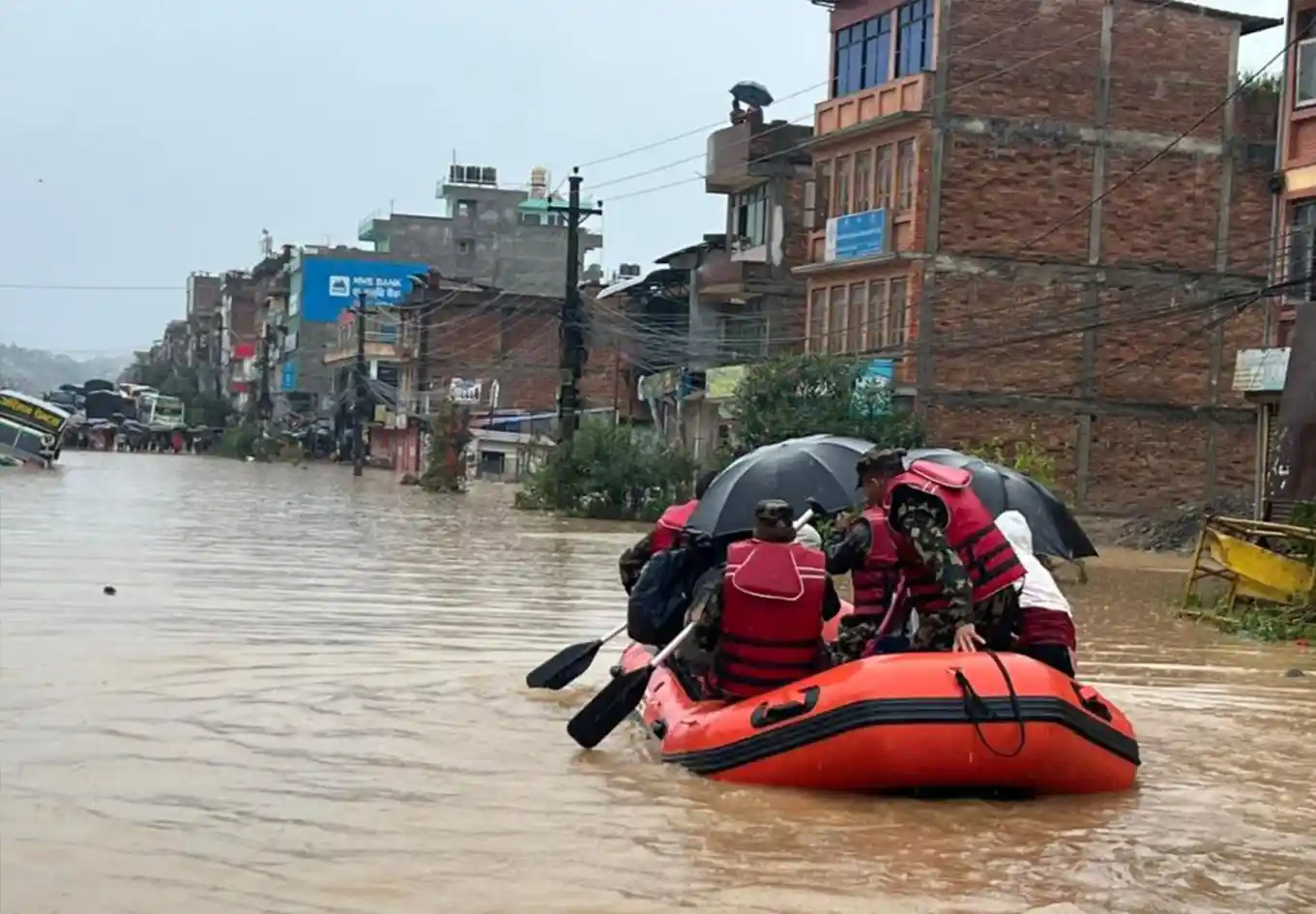
CATASTROPHIC FLOODS HIT NEPAL AS DEATH TOLL SOARS ABOVE 1,000
KATHMANDU, NEPAL Nepal is facing one of its most devastating natural disasters in recent years after catastrophic floodi…

John Ternus officially took over as Apple's new Chief Executive Officer
CUPERTINO, CALIFORNIA Apple announced that Tim Cook will become executive chairman of Apple’s board of directors and Jo…

NOVAK DJOKOVIC SUFFERS SHOCK US OPEN EXIT AFTER GRUELLING FIVE-SET
NEW YORK, UNITED STATES Novak Djokovic's pursuit of a record-extending 25th Grand Slam title suffered a stunning setback…

U.S.–VENEZUELA OIL DEAL: WASHINGTON SECURES CONTROL OF 65 BILLION
WASHINGTON CARACAS The United States and Venezuela have reached a landmark oil agreement that could dramatically reshape…

THE MAMBILLA IDENTITY: WHO WILL SPEAK OUR LANGUAGE FOR US?
I recently walked through Gembu town, and I could not help but notice how drastically it has changed. Gembu has grown tr…