Genealogy of Liimila (Ndiimó) Chiefs: The Historical Evolution of Southern Mambilla Traditional Leadership
The genealogy of the Liimila (Ndiimó) Chiefs provides an important insight into the history, traditional institutions, and leadership succession of the Southern Mambilla people. The historical account traces the evolution of traditional authority from the early Mbonnyia Dynasty at Kurshin, through the Nguni Dynasty, and eventually to the restoration of Southern Mambilla Chiefdom under its founding Mbondua, His Royal Highness Ambassador (Dr.) Emmanuel Chami Quiltomi Njiwah.
The Mbonnyia Dynasty: The Early Traditional Institution
Before the 1850s, the Mbonnyia Dynasty at Kurshin represented an early traditional leadership institution among the Liimila people. According to the historical account, the dynasty was associated with the ancestors of the Ngutiibi family and other related families.
The leaders of this period were not merely political authorities but also chiefs and priests of the traditional religion. Their leadership reflected the close relationship between traditional governance, spiritual authority, and community life. The Mbonnyia Dynasty therefore occupies a significant place in the early genealogy of Liimila traditional leadership.
The Emergence of the Nguni Dynasty
Around 1850, the Nguni Dynasty emerged as a prominent traditional ruling lineage. Ngwa Gùlù, son of Gèyìl of Nguni (Ngwuni), is identified as one of the early chiefs of this dynasty.
His successor and nephew, Ngwa Nyiarrdua Mursù, also known as Yiarrdua, was born around 1842. He was the son of Mursù, son of Gèyìl, and became a significant figure in the history of Liimila traditional leadership.
Nyiarrdua the nephew of Gùlù was already reigning when the Germans arrived in the Mambilla region. Between 1906 and 1909, he was recognized by the German administration and subsequently by the British. His reign continued into the period of European colonial administration until his death in 1922, during the Euro-interregnum.
Following his death, a period of more than two years of interregnum occurred before the next traditional ruler emerged. Ngwa Tip Gùlù, who retained the German letters of authority and a royal rhombus associated with the previous administration, later became an important figure in the succession.
The Succession of Liimila Chiefs, 1925–2019
The twentieth century witnessed several transitions in the leadership of Liimila, reflecting changes in traditional authority and the influence of colonial and postcolonial administrations.
Ngwa Tip Gùlù assumed the throne in 1925 and reigned until 1954. He was from Nguni (Ngwuni) and was also recognized as a high priest of the traditional religion. His reign represented a continuation of the spiritual and cultural responsibilities associated with the traditional institution.
He was followed by Ngwa Marrmi Tip, who ruled from 1955 to approximately 1961 and was described as a Mbon Belí, meaning Lord of the Sanctuary.
Ngwa Maami, son of Gwuòl and from Nguni, succeeded him around 1961–1962. His mother was Biilenyia.
In February 1962, Ngwa (Pastor) Phillip Quiltomi Njiwah ascended to the throne. His reign lasted until 19 April 1963. His name is pronounced “Kwiltomi.” His brief reign marked another transition in the genealogy of Liimila traditional leadership.
Ngwa Duula Mbàpù, son of Mbàpù, became the next ruler in 1963. He remained on the throne until 1986, making his reign one of the longer periods of leadership in the recorded succession.
Ngwa Vùah Duula succeeded him on 17 February 1987 and reigned until 25 February 2007. His leadership was followed by Ngwa Sale Vùah Duula, who ruled from 2007 to 2019.
In 2019, Ngwa Sale Vùah Duula transitioned from the position of traditional chief to become Mbon (District Head), marking another significant development in the traditional leadership structure of Southern Mambilla.
The Restoration of Southern Mambilla Chiefdom
The restoration of Southern Mambilla Chiefdom represents a significant chapter in the history of traditional governance in the region. Following the historical succession of Liimila (Ndiimó) Chiefs, Southern Mambilla officially became a chiefdom through its restoration under the founding Mbondua, His Royal Highness Ambassador (Dr.) Emmanuel Chami Quiltomi Njiwah.
The restoration signified the re-establishment of a recognized traditional institution and provided a new chapter for the preservation of the cultural identity, historical heritage, and traditional governance of the Southern Mambilla people.
The founding Mbondua, HRH Amb. (Dr.) Emmanuel Chami Quiltomi Njiwah, stands as a central figure in this renewed traditional structure. His emergence represents the continuation of the historical heritage of Southern Mambilla and the institutional development of its traditional leadership.
Source: Evolution of the Traditional political system in Mambilla
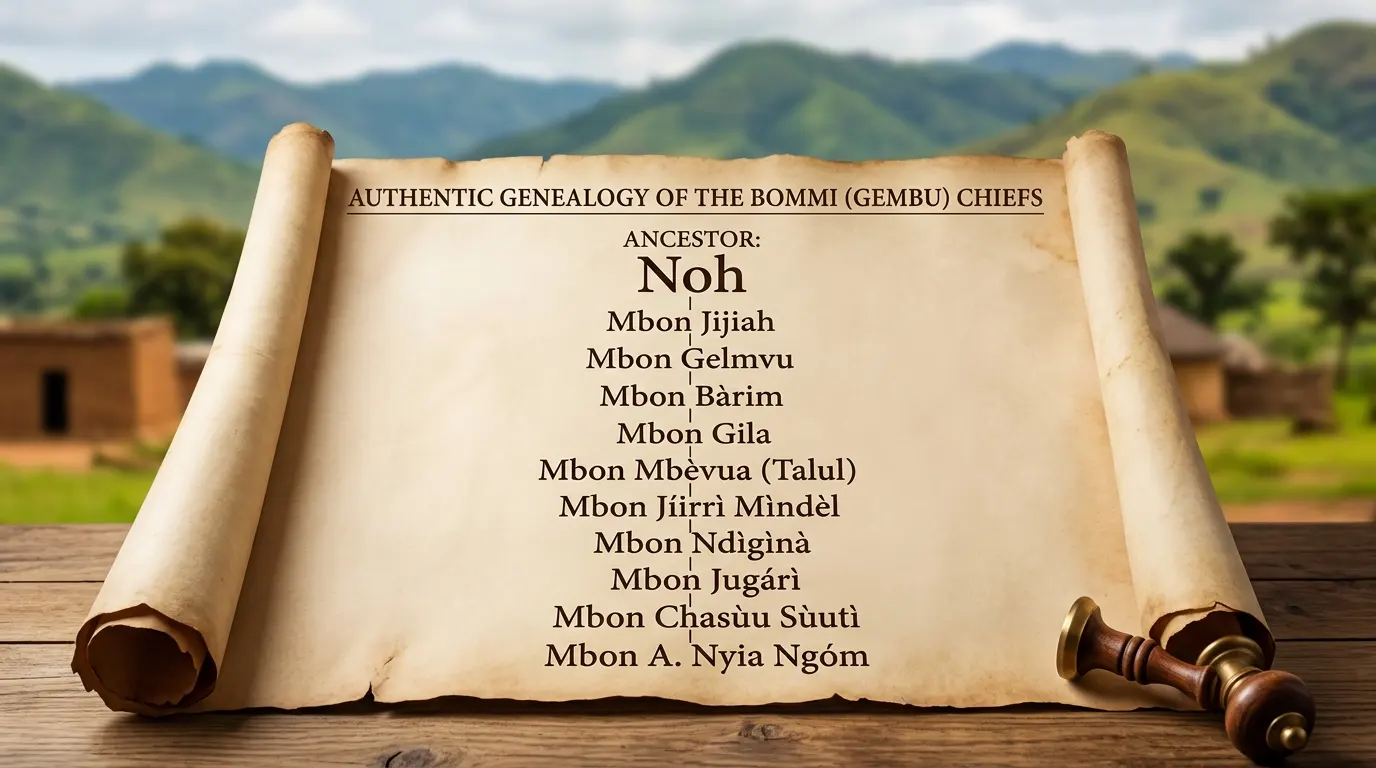
Genealogy of Bommi(Gembu) Chiefs in History
The genealogy of Bommi Chiefs provides a historical account of the traditional leadership lineage of Bommi within Mambil…
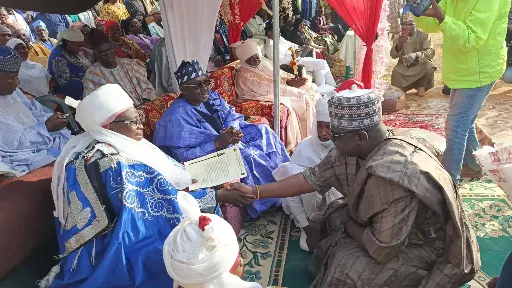
Genealogy of Kuma Chiefs
The genealogy of Kuma Chiefs provides a historical record of the traditional leadership lineage of Kuma within Mambillad…
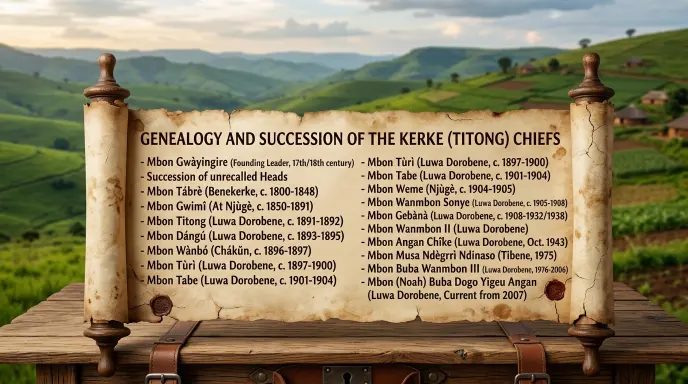
THE LIST OF KERKE(TITONG) CHIEFS
The history of Kerke is closely connected to the traditional leadership and the individuals who have played significant …
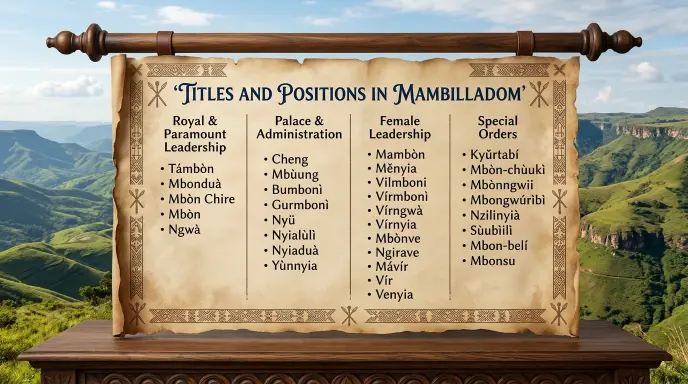
Titles and Positions in Mambilladom
The traditional titles and positions within Mambilladom reflect the rich cultural heritage, leadership structure, and so…